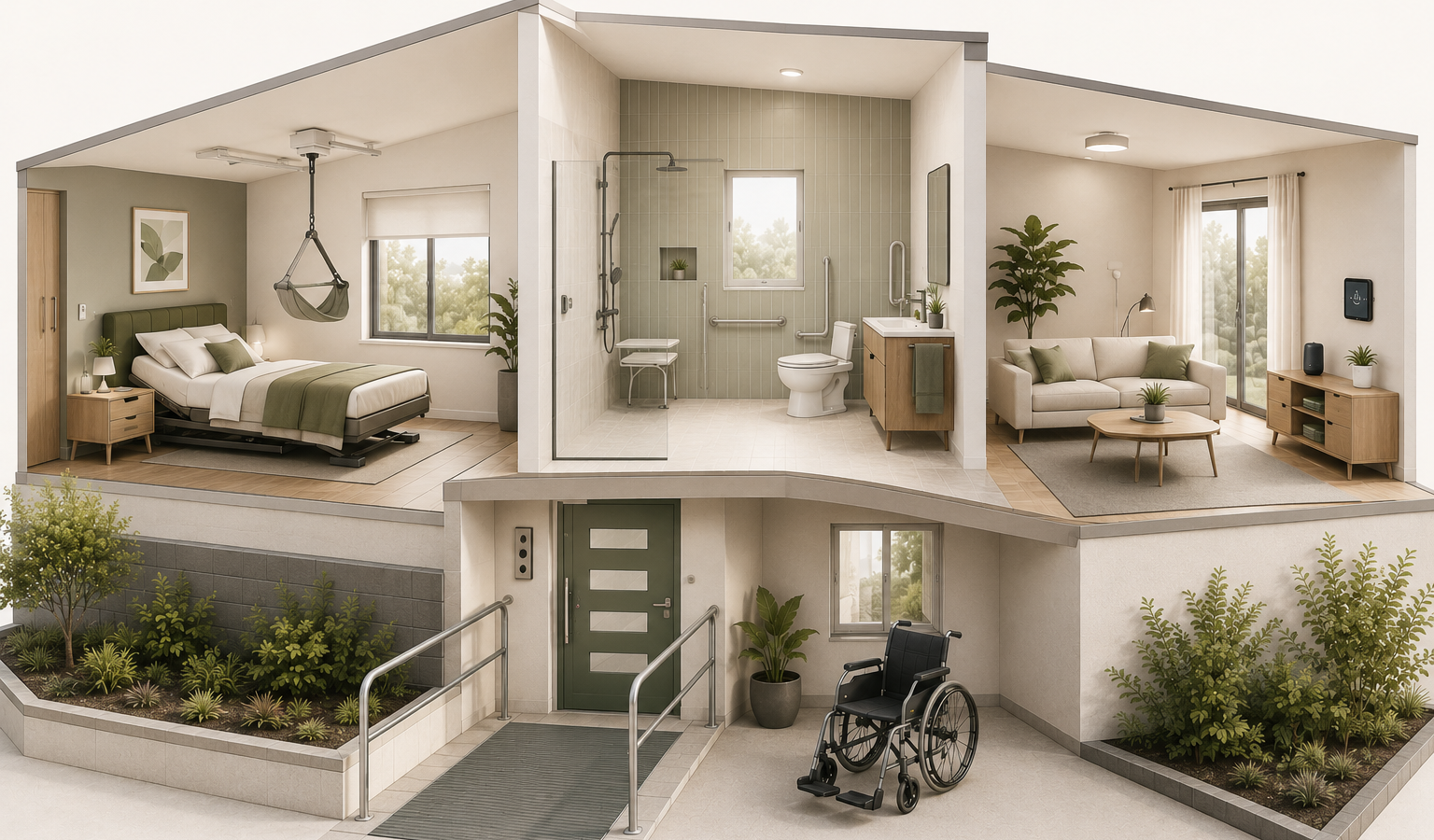
Assistive Technology is equipment or a device that helps you complete tasks you might not be able to because of your disability. It can support many areas of everyday life, including mobility, leisure and self-care.
Occupational Therapy
Assistive Technology
From assessment to equipment prescription, helping you access Assistive Technology that makes everyday life easier.
Assistive Technology includes equipment, devices and technology that help people complete everyday tasks more safely, independently and comfortably.
Contact Our Team Today
A practical, person-centred approach
Practical equipment for everyday independence
We work with participants, families, support coordinators and the broader care team to assess individual needs, trial equipment where appropriate, and recommend solutions that support independence at home, in the community and at work.
Our Occupational Therapists complete the functional assessments and clinical reports required to support NDIS funding for Assistive Technology. Where appropriate, we use standardised outcome measures alongside clinical assessment to evaluate function, measure outcomes and support evidence-based recommendations.
Assistive Technology explained
Understanding Assistive Technology and how it can support everyday life
Choosing the right level of support
Low, mid and high-cost Assistive Technology
Low-Cost Assistive Technology
Under $1,500.00
Simple, everyday items that support independence and safety with daily tasks. These products are easy to set up and use and are usually available from local suppliers or general retailers.
- Mobility aids: walking sticks or canes, four-wheeled walker frames and short portable ramps
- Communication aids: screen magnifiers and text-to-voice apps
- Bathing and toileting support: shower chairs, hand showers, handrails and incontinence alarms
- Household support: modified eating utensils, washing line adaptors, talking kitchen scales and adjustable-height chairs
Low-cost Assistive Technology includes simple, everyday items that can support independence and safety with daily tasks.
Mid-Cost Assistive Technology
$1,500.00 – $15,000.00
Items typically priced between $1,500 and $15,000. These supports are often more complex to choose, customise or set up, and require written evidence from a qualified AT advisor such as an OT before funding can be approved or a purchase made.
- Mobile hoists
- Mobile shower chairs
- Ankle-foot orthotics
- Adjustable beds
Your OT assesses your needs, recommends suitable equipment, and provides the clinical justification, quotes and training required.
High-Cost Assistive Technology
$15,000.00+
Complex Assistive Technology requiring comprehensive assessment, supplier collaboration, equipment trials and detailed reports aligned with NDIS funding requirements.
- Prosthetics
- Powered wheelchairs and seating
- Some vehicle modifications
Depending on the equipment prescribed, multidisciplinary input may also be required.
Equipment and environments
Assistive Technology in everyday life
Our Occupational Therapists consider the participant, their equipment, their activities and their environment together.
Beds, mattresses & sleep positioning
Support for safer sleep, comfort and positioning around the bed.
Mobility, transfers & manual handling
Assessment of ramps and transfer equipment for safer movement into and around the home.
Bathroom, toileting & daily living
Equipment that supports safer, more independent personal care.
Environmental controls & home access
Controls and access solutions that make the living space easier to use.
Wheelchairs, seating & pressure care
Seating and mobility solutions matched to the participant and their wheelchair.
A clear pathway
What to expect
A warm, practical journey from understanding what matters most to putting the right solution into place.
Referral and goals discussion
We discuss your goals, current equipment and functional challenges.
Occupational Therapy assessment
We complete a comprehensive assessment within your everyday environment.
Equipment trials
Where appropriate, we arrange trials with suppliers and the multidisciplinary team.
Recommendations and funding evidence
We prepare clinical recommendations, Assistive Technology reports and Letters of Support where needed.
Prescription, implementation and review
We support equipment prescription, education, review and ongoing Occupational Therapy input as needs change.
Funding guidance
Funding support packages
Estimated hours are tailored to the complexity of the equipment, the evidence required and the funding pathway. Your Occupational Therapist will confirm the right scope before work begins.
Low-Cost Assistive Technology package
Estimated 5 hours
What this package includes
- Sourcing and quoting appropriate items
- Liaising with suppliers
- Arranging purchases and tracking deliveries
- NDIS-ready documentation
- Low-cost items are typically funded under Core Supports, Consumables (Category 03), and are generally under $1,500 per item without the need for a formal assessment or quotes.
Mid-Cost Assistive Technology package
Estimated 5–10 hours
What this package includes
- Occupational Therapy assessment
- Clinical justification and equipment recommendations
- Supplier quotes and equipment trials where appropriate
- Training and funding documentation
High-Cost Assistive Technology package
Hours tailored to your assessment needs
What this package includes
- Comprehensive functional assessment
- Supplier collaboration and specialised equipment trials
- Detailed clinical reports aligned with NDIS requirements
- Multidisciplinary input where required
Assessment duration and delivery
- Initial Assistive Technology assessment: 60–120 minutes
- Equipment trials: 60–180 minutes and may require multiple sessions
- Follow-up or equipment reviews: 30–90 minutes
- Additional time may be needed for supplier liaison, clinical reasoning, reports and funding documentation
Where we can see you
- Clinic, where appropriate
- Client’s home, where most assessments are completed
- School, workplace or community setting when equipment use needs to be assessed there
- Telehealth for clinically appropriate reviews and consultations
- Residential aged care, SIL, SDA, hospitals and supplier showrooms for specialised trials
Why Intracare
Experienced, qualified and focused on the right fit
Assistive Technology should never be prescribed simply because it is available. Our approach is person-centred, evidence-based and goal-focused, ensuring recommendations are practical, sustainable and genuinely improve everyday participation. We work collaboratively with participants, families, suppliers and the broader multidisciplinary team to achieve the best possible outcomes.
- Extensive experience prescribing low, mid and high-cost Assistive Technology
- Strong understanding of current NDIS Assistive Technology pathways and funding requirements
- Collaborative supplier relationships to support informed equipment trials
- Comprehensive assessments focused on clinically appropriate, practical equipment
- High-quality clinical reporting to support funding applications
- Ongoing professional development through the Australian Rehabilitation and Assistive Technology Association
Helpful answers
Frequently asked questions
What is Assistive Technology, and how do I know if I need it?
Assistive Technology includes equipment, devices and technology that help people complete everyday tasks more safely, independently and comfortably. If daily activities are more difficult because of disability, an Occupational Therapist can assess your needs and recommend equipment that supports your goals.
Can you help me get Assistive Technology funded through the NDIS?
Yes. We complete Assistive Technology assessments and prepare the clinical reports and Letters of Support needed for funding applications. Recommendations are based on functional assessment, clinical reasoning, equipment trials where appropriate and current NDIS guidelines.
Can I trial equipment before it is purchased?
Wherever possible, we work with equipment suppliers to arrange trials. This helps ensure equipment is safe, comfortable and suitable before recommendations or reports are submitted.
Ready to explore the right equipment?
The standard referral form is suitable for most Assistive Technology referrals. Previous OT reports, functional capacity assessments, medical reports, equipment lists and NDIS plan goals are helpful where available.
Make a referral