
Speech Pathology
Communication takes many forms. Every one matters.
Speech Pathology for children and adults across every stage of life, supporting communication, speech, language, voice, literacy, feeding and swallowing. Call our team on 0480 702 761 or send us an enquiry and we'll be in touch.
Contact Our Team Today
Contact Our Team Today
Communication
There's more than one way to communicate.
Communication takes many forms. Select a mode below to explore how people connect and express themselves every day.
Speak
Speech Pathology supports every way a person connects with their world - not just spoken words.
Who we support
Communication support across life.
We support people from early childhood through to older adulthood - tailoring assessment and intervention to each person's individual strengths, needs and communication goals.
Early childhood
School years
Young adulthood
Adulthood
Older adulthood
Supporting children and families
We support children from early childhood through school age with speech, language, literacy, feeding and social communication needs. We work closely with families, carers and educators to embed strategies into everyday routines.
Supporting adults across the lifespan
We support adults with communication, speech, voice, swallowing and cognitive-communication difficulties, including those associated with stroke, brain injury and neurological conditions, as well as AAC and functional communication needs.
Services
Four areas. One connected approach.
Select a service area to explore the full range of clinical support available through Intracare Speech Pathology.
AAC
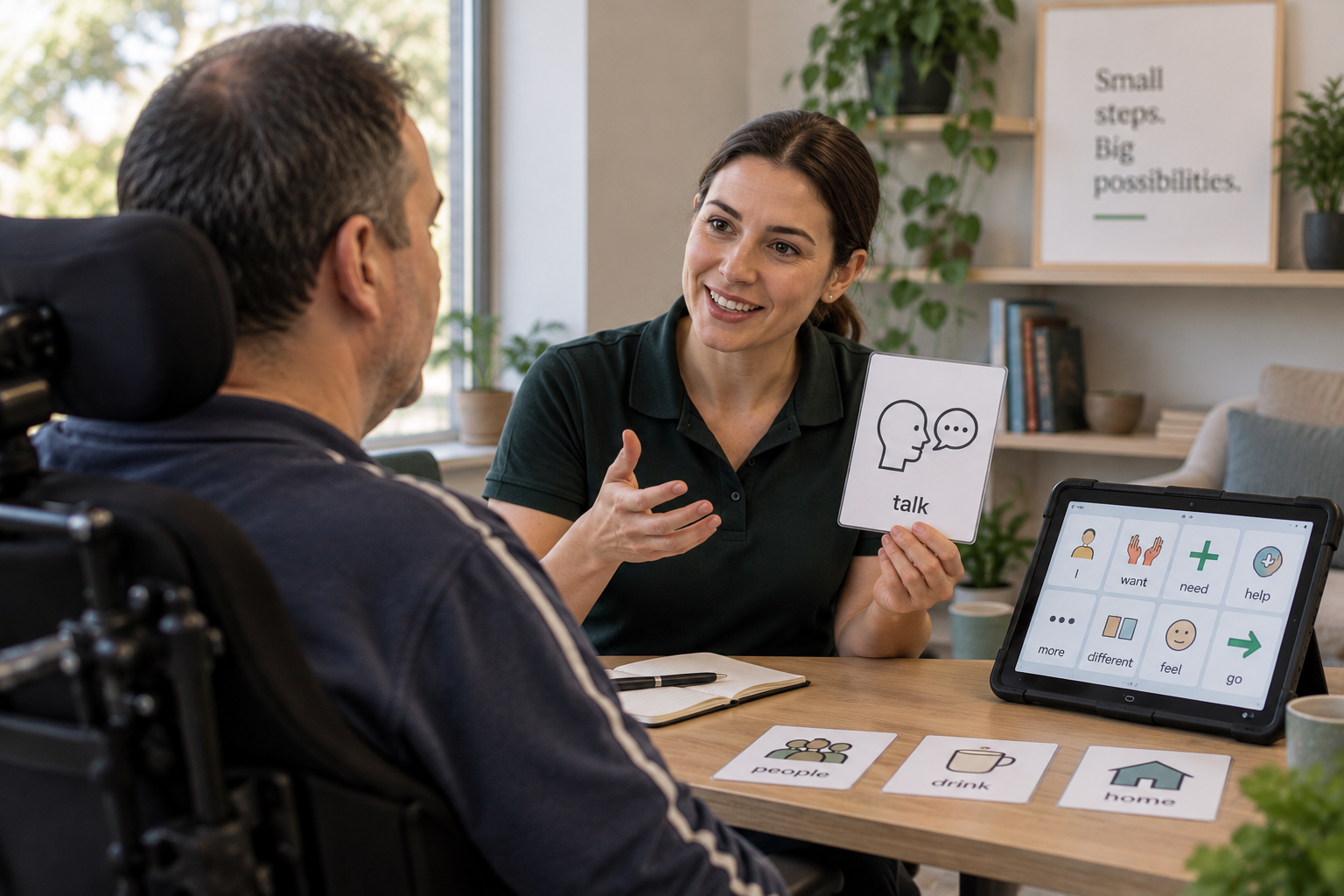
Communication is more than spoken words.
Augmentative and Alternative Communication (AAC) supports people who find spoken communication difficult or impossible. Intracare's Speech Pathologists provide end-to-end AAC support.
- 1Assessment
- 2Device trials
- 3Recommendations
- 4Funding and application support
- 5Implementation
- 6Communication-partner training
Fluency
Communication doesn't have to be perfectly smooth to be meaningful.
Stuttering support
Assessment and intervention for stuttering across childhood and adulthood, with a focus on communication confidence and participation.
Fluency strategies
Evidence-based strategies to support communication in everyday situations — at school, work and in the community.
Affirming approach
We take a non-pathologising, person-centred approach — supporting each person to communicate in the way that works best for them.
Voice
A voice that feels like yours.
Voice disorders, vocal difficulties, and gender-affirming voice and communication — our Speech Pathologists support each person to find and use a voice that feels authentic and comfortable.
Voice disorders
Assessment and management of voice disorders and vocal difficulties, including vocal nodules, dysphonia and other voice concerns.
Gender-affirming voice
Supportive, affirming voice and communication therapy for transgender and gender-diverse individuals.
Voice assessment
Comprehensive voice assessment and evidence-based management plans tailored to each person's goals.
Communication strategies
Practical strategies to support effective and sustainable voice use in everyday life.
Feeding and swallowing
Supporting safer, more positive mealtimes.

Feeding
- Feeding difficulties and oral motor skills
- Food refusal and restricted food repertoires
- Mealtime management and support
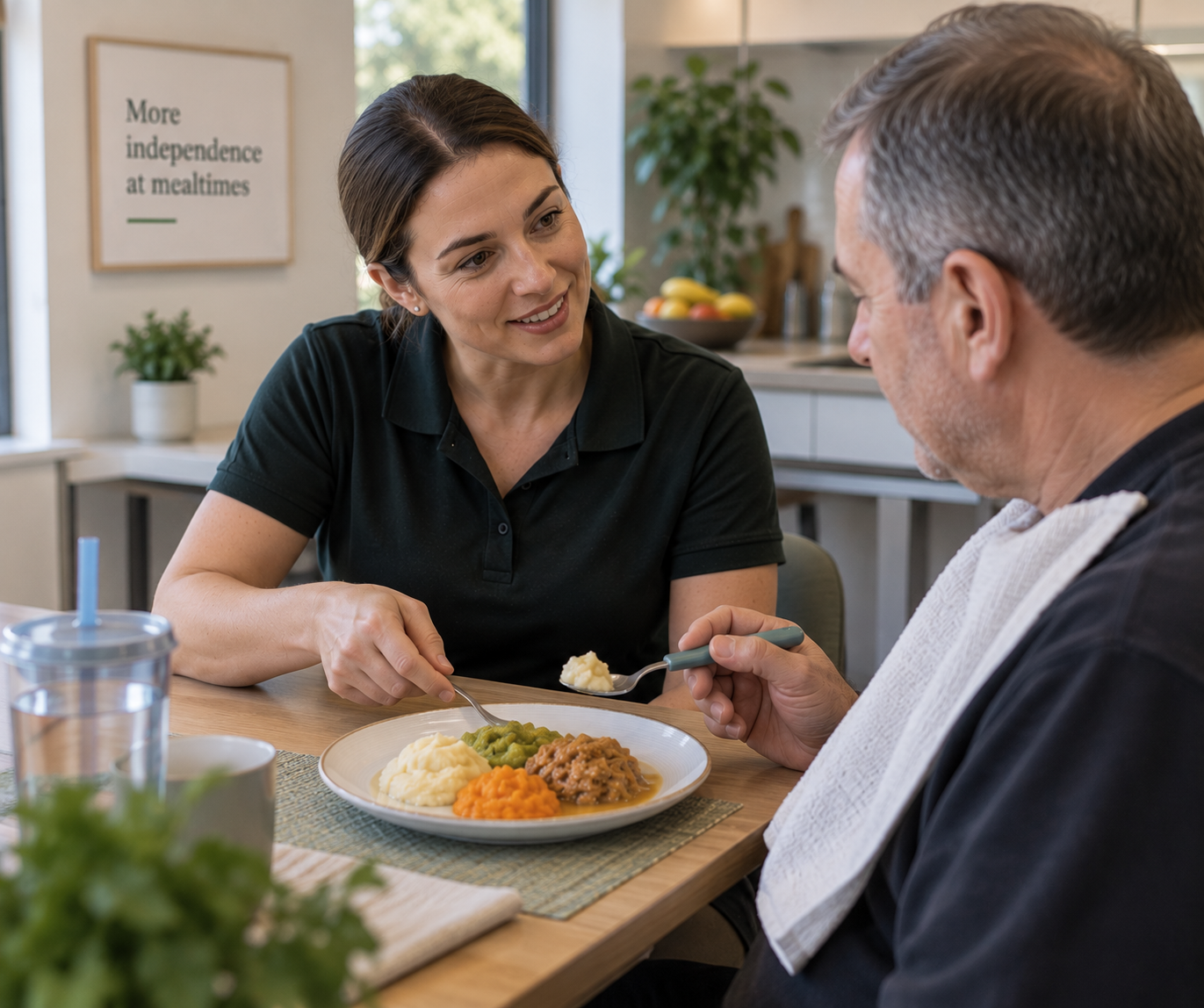
Swallowing
- Dysphagia and swallowing assessment
- Swallowing and mealtime management plans
- Texture modification recommendations
Literacy
From sounds to words to meaning.
Hover to highlight
Early literacy
Supporting the development of foundational literacy skills from early childhood.
Reading and dyslexia
Assessment and support for reading difficulties, including dyslexia, using evidence-based approaches such as Sounds Write.
Written expression
Supporting written language development and reading comprehension across school and community settings.
Neurological rehabilitation
Communication after neurological change.
Our Speech Pathologists support adults with communication, language, voice and swallowing difficulties following stroke, brain injury and progressive neurological conditions - including Parkinson's disease, MS, Huntington's disease, dementia and cerebral palsy.
Where we work
Communication happens everywhere. So can therapy.

Clinic
Bibra Lake

Home
Client's home

School & community
School, workplace or community

Telehealth
Online sessions available
In session
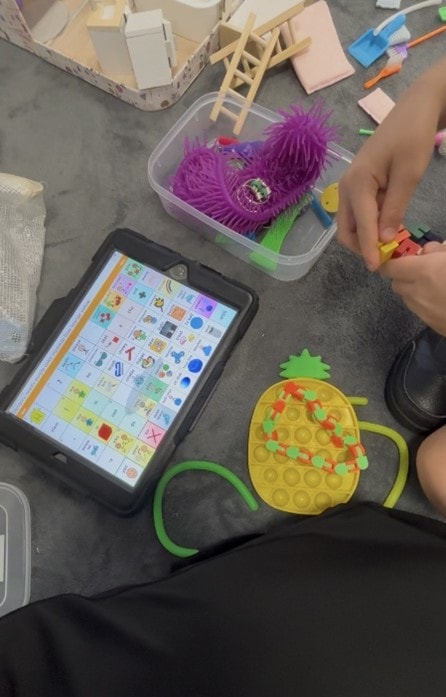
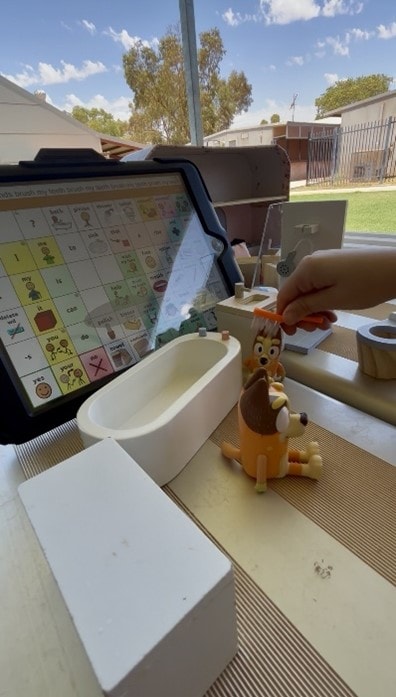
What a session looks like.
What to expect
From listening to progress.
Referral & intake
We receive your referral, confirm funding, and match you with the right clinician for your needs.
Initial assessment
A comprehensive assessment of communication, feeding or swallowing needs, goals and strengths.
Therapy & support
Personalised, evidence-based therapy delivered in the setting that works best for you.
Review & progress
Regular reviews to track progress, update goals and adjust the plan as your needs evolve.
Referral & intake
We receive your referral, confirm funding, and match you with the right clinician for your needs.
Initial assessment
A comprehensive assessment of communication, feeding or swallowing needs, goals and strengths.
Therapy & support
Personalised, evidence-based therapy delivered in the setting that works best for you.
Review & progress
Regular reviews to track progress, update goals and adjust the plan as your needs evolve.
Packages and pricing
Choose what you need help with.
Hours and pricing are indicative - your Speech Pathologist will confirm the allocation that best suits your needs and available funding.
Communication Assessment
From $193.99/hr (NDIS)
Comprehensive assessment of speech, language and communication needs.
Includes
- Initial interview and case history
- Standardised and informal assessment
- Written report with recommendations
Suitable for NDIS participants, private clients and referrals from other health professionals.
Feeding & Swallowing Assessment
From $193.99/hr (NDIS)
Assessment of feeding difficulties, dysphagia and mealtime management.
Includes
- Mealtime observation and assessment
- Texture and diet modification recommendations
- Mealtime management plan
Includes written report and recommendations for carers and support teams.
Why Intracare
Perth's allied health team for every stage of life.
Intracare Services brings together Speech Pathologists, Occupational Therapists and Physiotherapists under one roof — so your support is coordinated, consistent and built around you.
Specialist training and qualifications
- Speech Pathology Australia (SPA) certified clinicians
- NDIS registered provider
- Experience across paediatric, adult and aged care settings
- Specialist training in AAC, dysphagia and neurodiversity-affirming practice
Across the lifespan
We support clients from early childhood through to older adulthood — not just paediatric speech.
Neurodiversity-affirming
We take a strengths-based, neurodiversity-affirming approach to every assessment and intervention.
Collaborative
We work closely with families, carers, educators and other professionals to support meaningful outcomes.
Evidence-informed
Our practice is grounded in current evidence and specialist training across a wide range of clinical areas.
FAQs